( ) in stone is dedicated to the cup-marked sacrificial stones scattered throughout Estonia known as ohvrikivid. With great sensitivity, the collective proposes a kind of channeling: ways of thinking with these stones, understanding them, communicating with them, and cultivating ethical relationships grounded in reciprocity and consent across different spatio-temporalities and beyond the constraints of anthropocentrism. Karl's video installation offers one possible way of engaging with ritual in the contemporary world – rituals capable of transforming our perception of time, space, and the more-than-human world, while renewing the relationship between humans and stone as a being in its own right. Magda's installation focuses on traces of human presence and on the multiple interpretations of sacrificial stones through photography and archival materials. Mana's film reflects on the loss of our capacity to listen to nature while searching for possibilities to restore dialogue between humans and the landscape. This constellation of interconnected perspectives is complemented by a publication documenting and mediating the project's shared research trajectory – both human and more-than-human.
Imprint
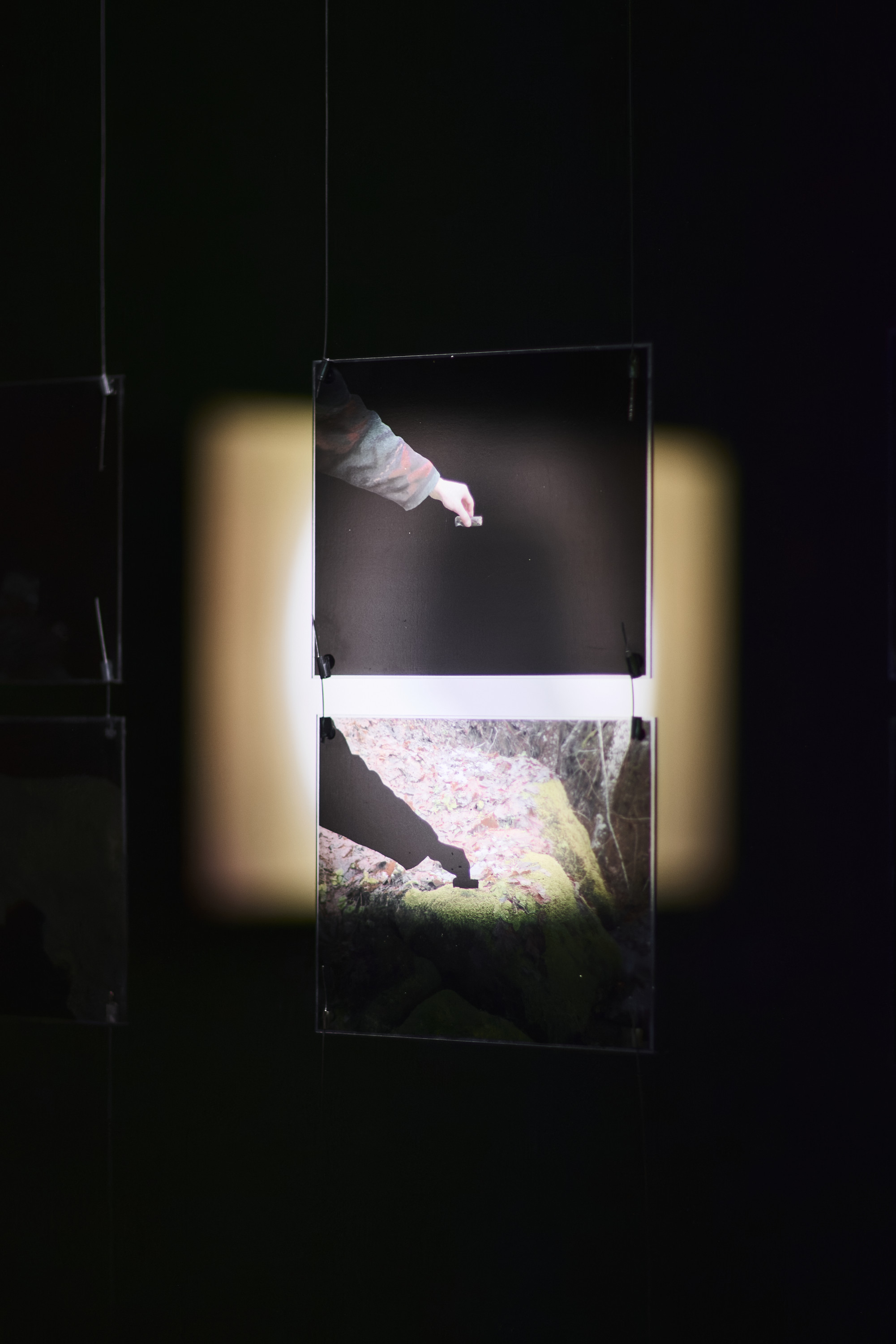
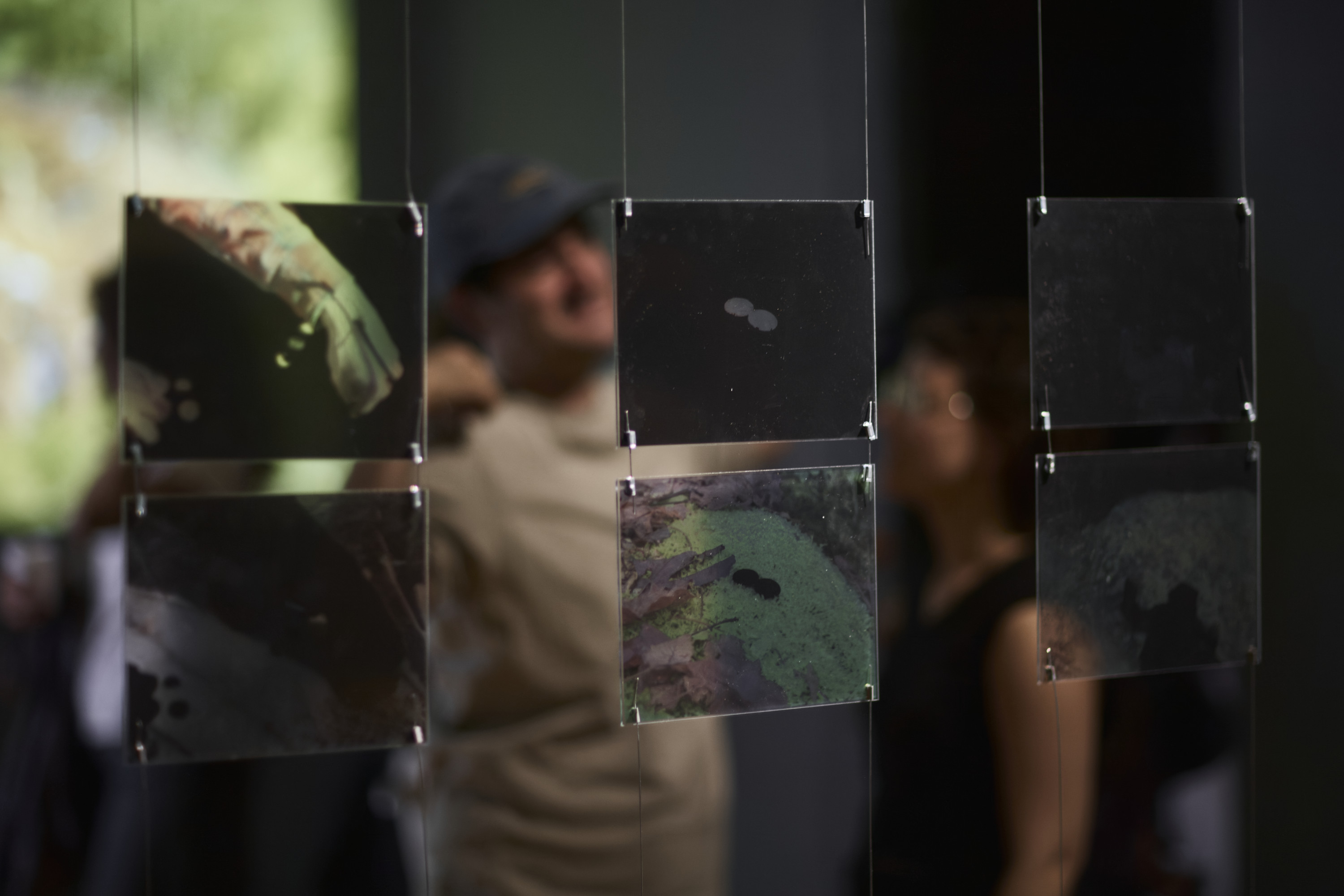
Magda Kopańska
series of photographs, video without sound
This work deals with the topic of human presence and interference in the materiality of glacier stones in Estonia.
Cup-marked stones in Estonia were left with a human imprint on them. The touch of countless palms fixed visible and invisible marks onto their surface. Some hands have carved the cup marks, and some others continued to leave offerings in those cavities. Some people decided to speak about the supernatural powers of the stones, and some others started to collect those as a means of folkloristic record, whilst some others disregarded their powers and were punished for the irreverence. These occurrences exist as perspectives on the same physical matter, and the stones themselves testify to the concurrent interpretations of the invitation that they posed to people by the fact of their existence.
Stones are both a subject and object of this work, so are the people and their customs. Not wanting to conclude this work in a universalising tone, this work performs a commentary about my own invitation by the cup-marked stones and the shape of my perspective.
Stone per Hour
Karl Kaisel
interactive video installation
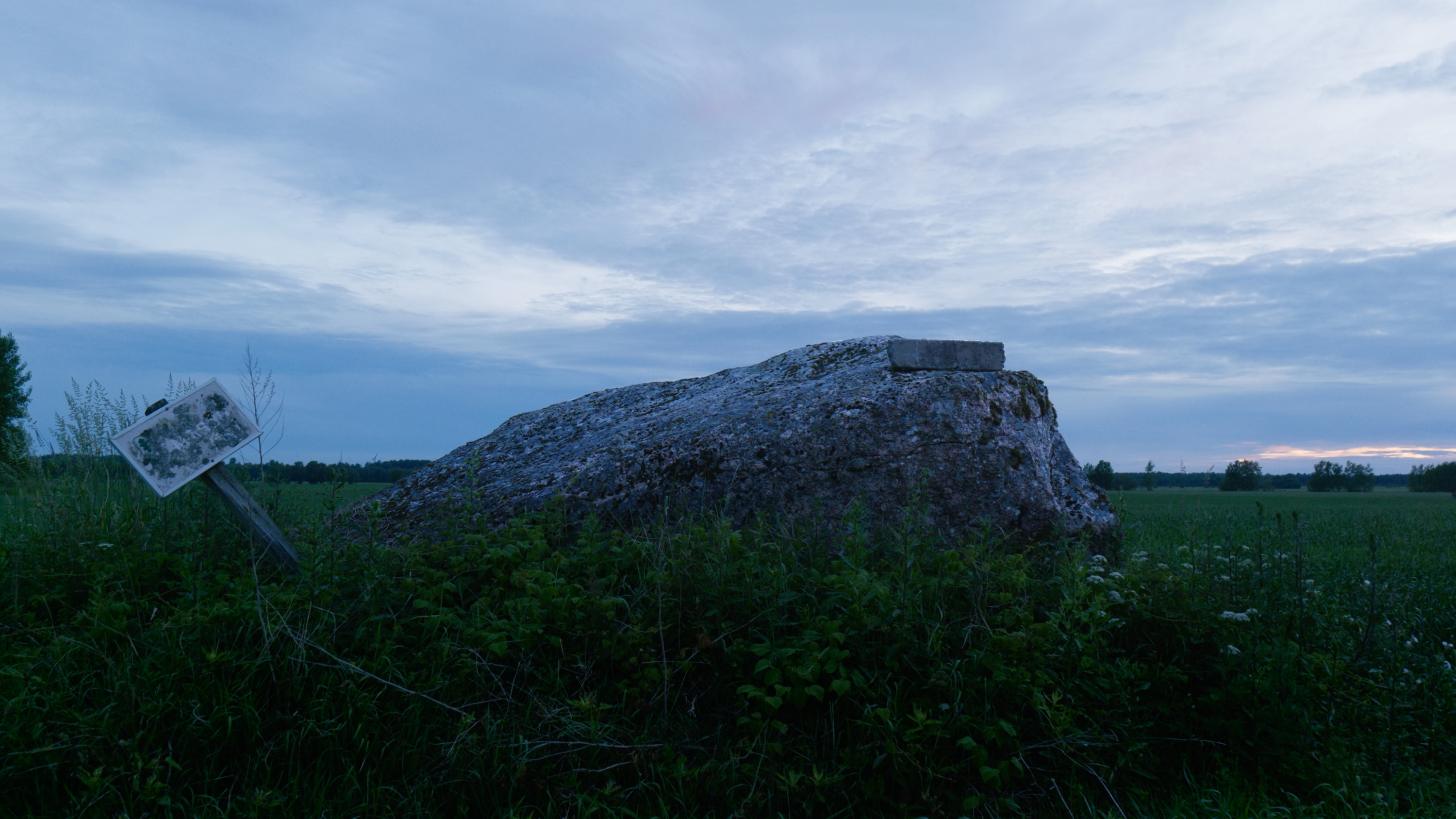 I spent 24 hours filming 24 culturally significant stones across a 100‑square‑kilometer area at my home on Midsummer’s Eve. At each site, I repeated the same actions: positioning myself relative to the sun and the stone, filming at the full hour, then thanking the stone and leaving a small offering. This ritual repeated 24 times. Soon I realised that I wasn’t anymore engaging with time and space as I usually do. I had entered the lithic time and space. The different locations puncturing the day became synonyms with moments in time. Strange things started to happen. I had passed to the ordinary world and time to a place perhaps more open for alternative agencies.
This experience confirmed that stones are ritual technologies with agency. Their power lies in relationships, to landscape, to lichen, to deep time, and to our own bodies. Meaning emerges from these connections, not from the stones alone. Ritual makes this web tangible, transforming the unfamiliar into the familiar, and helping us feel at home within a world that often exceeds our human‑centred understanding..
Teaching a stone to talk
Mana Tashakorinia
video
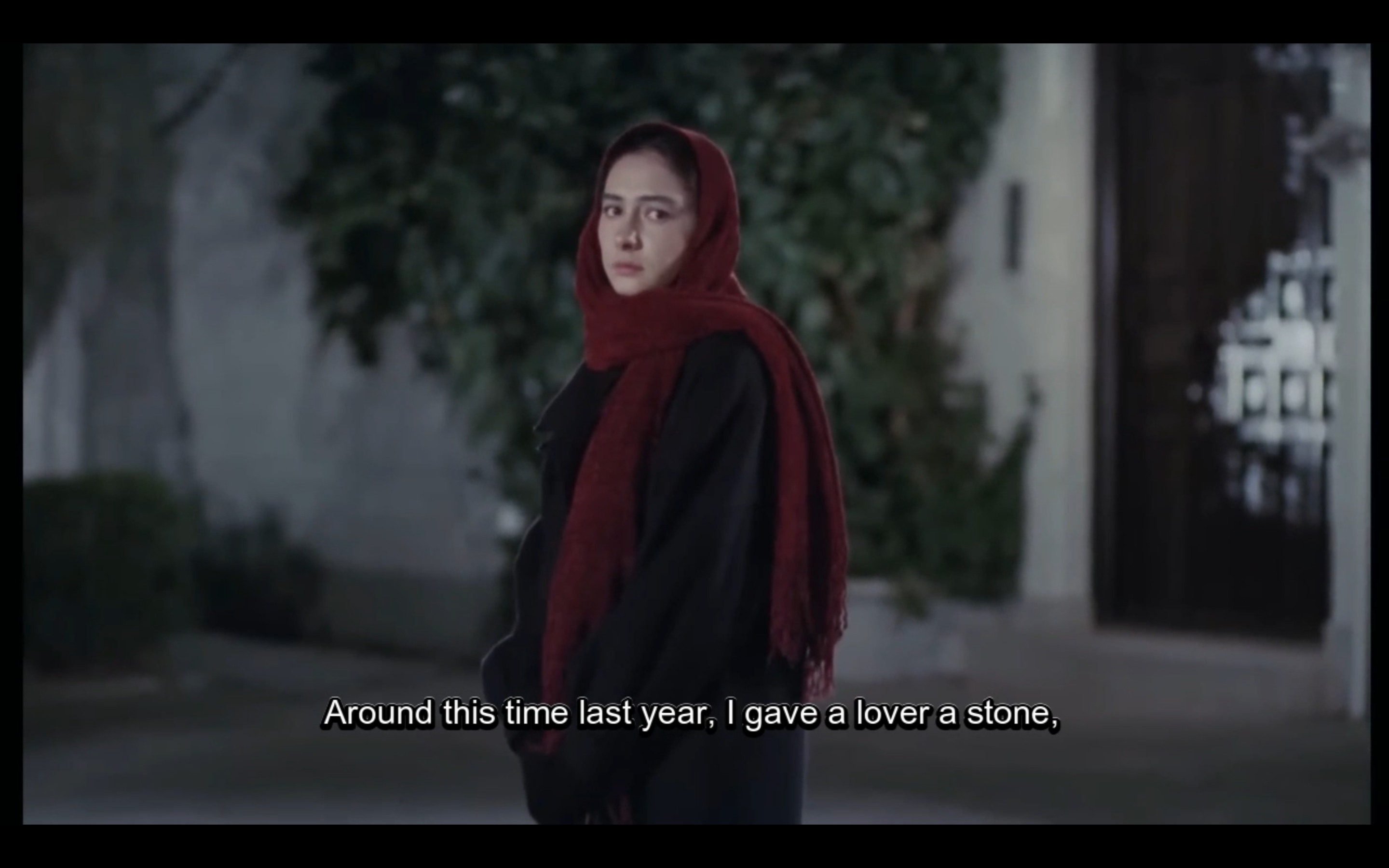 It is difficult to undo our own damage, and to recall to our presence that which we have asked to leave. It is hard to desecrate a grove and change your mind. The very holy mountains are keeping mum. We doused the burning bush and cannot rekindle it; we are lighting matches in vain under every green tree. Did the wind use to cry, and the hills shout forth praise? Now speech has perished from among the lifeless things of earth, and living things say very little to very few. Birds may crank out sweet gibberish and monkeys howl; horses neigh and pigs say, as you recall, oink oink. But so do cobbles rumble when a wave recedes, and thunders break the air in lightning storms. I call these noises silence. It could be that wherever there is motion there is noise, as when a whale breaches and smacks the water - and wherever there is stillness there is the still small voice, God’s speaking from the whirlwind, nature’s old song and dance, the show we drove from town. At any rate, now it is all we can do, and among our best efforts, to try to teach a given human language, English, to chimpanzees.*
* excerpt from Teaching a Stone to Talk by Annie Dillard