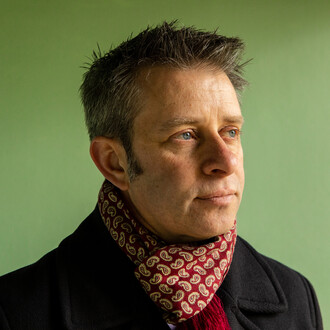
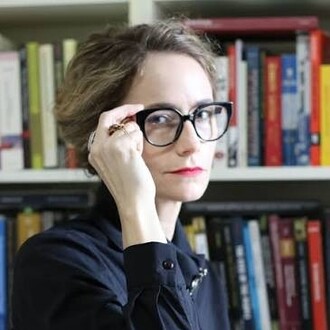
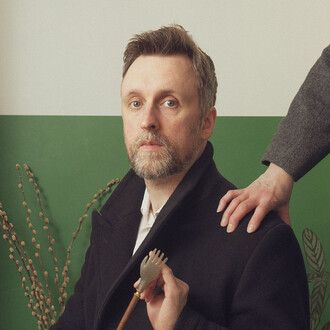
What does Europe mean today? Can humour help us cope with the climate crisis? What happens to democracy when power becomes concentrated in the hands of a small group? And is the world as we know it the only world possible?
This year, for the first time, the Inspiration Forum will move four of its main programmes to the main hall of Horácké Theatre. The new Big Talks series will open with political philosopher and writer Lea Ypi. Jihlava will also welcome climate researcher and stand-up comedian Matt Winning, political theorists Camila Vergara and Samuel Bagg, and archaeologist David Wengrow, co-author of the international bestseller The Dawn of Everything.
Big Talks brings together four questions that run through this year’s Inspirační fórum: how to understand the world we live in, where power lies within it, and what we can change about the way it is organised today. The programmes What Is Europe For Today?, What Can Humour Do in a Crisis?, How Can We Limit the Power of Oligarchs? and The Dawn of Change will also be open to people without festival accreditation. Tickets can be purchased separately in advance.
Lea Ypi: What Is Europe For Today?
Political philosopher and writer Lea Ypi grew up in communist Albania and, as a child, experienced both the collapse of the regime and the subsequent transition to democracy and a market economy. Her experience of a society undergoing profound change became one of the starting points for her thinking about freedom. She is the author of Free and Indignity, and her autobiographical book Free: Coming of Age at the End of History has been published in more than thirty languages.
24 October at 5:30 pm
What is Europe actually trying to defend, and what kind of future can it offer at a time when the far right is able to speak more convincingly about belonging, freedom, dignity and change than its political opponents? Political philosopher and writer Lea Ypi, author of Free and Indignity, will focus in her keynote and subsequent conversation on Europe as a political project, the relationship between its eastern and western parts, and the experience of post-communist societies, which for a long time were expected primarily to catch up with the West. But what if they themselves now have something to offer Europe? And what would need to change for Europe to become not merely a project that defends the existing order, but one capable of offering a new vision of freedom, dignity and a shared future?
Matt Winning: What Can Humour Do in a Crisis?
Scottish climate researcher and comedian Matt Winning has long worked on climate policy while also exploring ways of talking about the climate crisis through stand-up comedy. His show Solastalgia regularly sells out London’s Soho Theatre and will also be performed in Jihlava. It will be followed by a discussion about what humour can do with a subject so often associated with fear and helplessness.
25 October at 5:30 pm
We have known everything essential about the climate crisis for decades. So why aren’t the facts alone enough to make us change? Scottish climate researcher and comedian Matt Winning is trying a different approach: humour. In Jihlava, he will perform a selection from his stand-up show Solastalgia, which connects the climate crisis with the fossil-fuel industry, finance, parenthood and the absurdity of everyday life. Afterwards, in conversation, he will discuss why humour can sometimes open up subjects we would otherwise rather look away from, where satire ends and trivialisation begins, and how to preserve hope and our ability to act in times of crisis.
Camila Vergara and Samuel Bagg: How Can We Limit the Power of Oligarchs?
Political theorist Camila Vergara and political scientist Samuel Bagg focus on the concentration of political and economic power and the functioning of democratic institutions. Vergara’s work explores, among other things, oligarchisation and the possibilities for democratic control of power, while Bagg examines questions of democracy, political representation and institutional design. In Jihlava, they will come together to address the question of how democracy can respond when political and economic power becomes concentrated in the hands of an ever smaller number of people..
30 October at 8:00 pm
Even in a democracy, power can gradually become concentrated in the hands of those with the most money, connections and influence. Political theorist Camila Vergara and political scientist Samuel Bagg agree that this is one of the biggest problems of our time. They also agree that something can be done about it. Where they differ is in how much power should be redistributed. Is it enough to keep those in power better in check within the existing system, or do we need new institutions that would give ordinary people a genuine ability to influence decision-making? Their discussion will focus on concrete ways to limit oligarchic power and give citizens a greater say in how decisions are made.
David Wengrow: The Dawn of Change
Archaeologist David Wengrow, professor of Comparative Archaeology at University College London and, together with David Graeber, co-author of the international bestseller The Dawn of Everything, explores the diversity of human societies and the ways in which people in different periods have organised power, property and collective decision-making. Together with Wengrow, we will look towards change in Jihlava — and, above all, search for ways to begin making it happen.
31 October at 5:30 pm
Human societies have been far more diverse and political than we commonly portray them. Archaeologist David Wengrow, co-author of the bestseller The Dawn of Everything and the forthcoming book The Third Freedom, shows that for millennia, people have experimented with very different ways of organising power, property and collective decision-making — and have also been able to abandon those arrangements and change them again. In his keynote and subsequent conversation, he will therefore look not only at the past, but at what it can tell us about our future. Why have we become accustomed to choosing between options that already exist instead of changing the rules themselves? And if today’s world is not the only one possible, what can we still change about it?